Live stock
Stock movement follows real selling patterns, getting you closer to the consumption and cost that actually matter.
- Fewer unexpected stock-outs
- Better replenishment control
- Less dependency on spreadsheets
Inventory and margin
Mesero connects inventory, purchasing, stock counts, waste and recipes to real sales. That moves the conversation from total revenue to where margin is actually going.
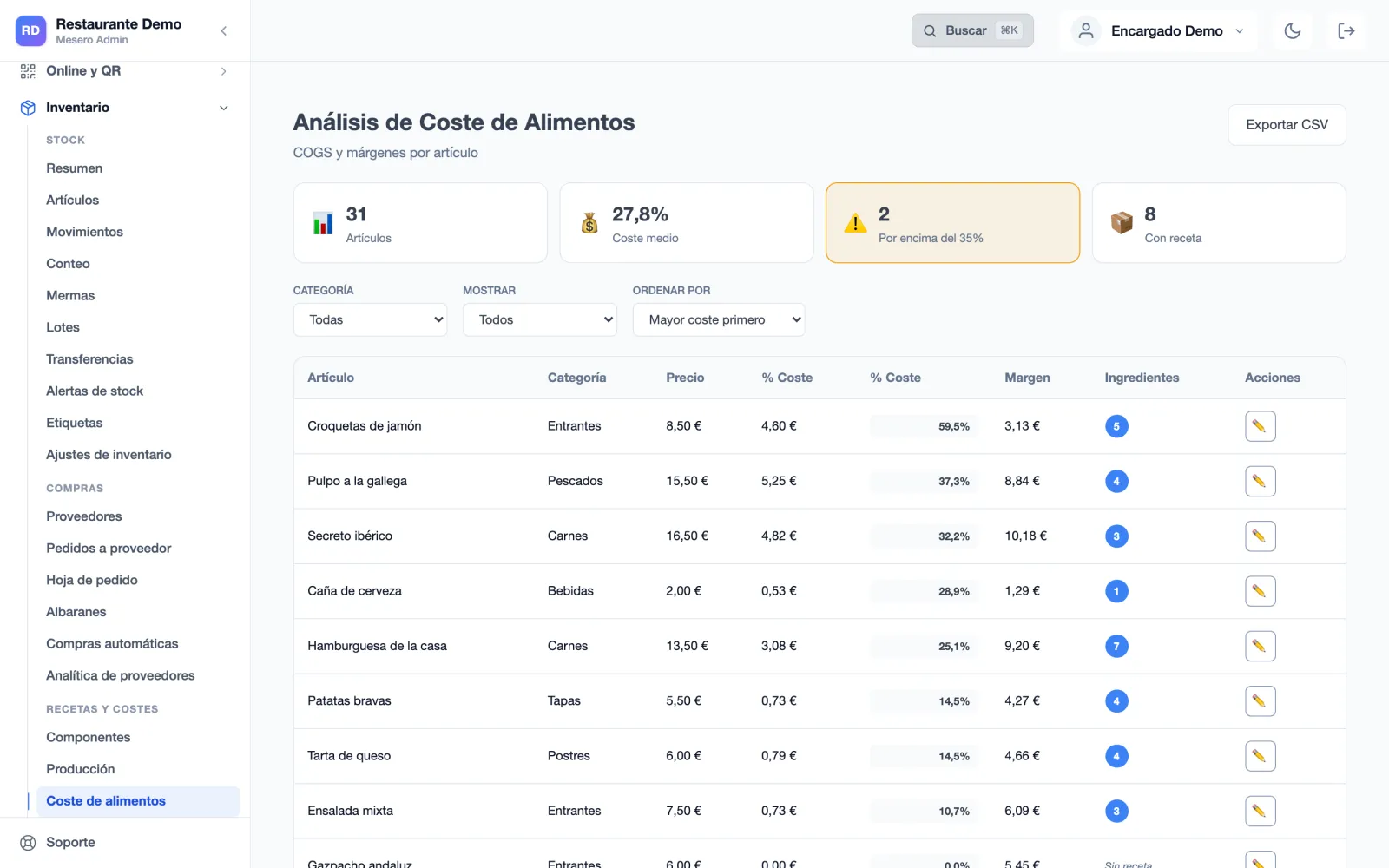
A costed recipe is a dish's recipe with a price on it: what goes in, in what quantity, and what each ingredient costs. Food cost is the share of the selling price that cost takes.
This is the burger from Mesero's demo menu, with its recipe. Move the price, or raise the beef, and see what happens to the margin before it happens in your till.
Under 30%: a healthy margin for a main course.
Inventory only matters if it feeds off the real pace of the business. If it has to be maintained elsewhere, it gets abandoned. Mesero keeps it next to sales and purchasing so it stays operationally relevant.
Stock movement follows real selling patterns, getting you closer to the consumption and cost that actually matter.
Purchase orders, suppliers and stock entries share the same layer that consumes stock and reads margin.
Recipes, waste and adjustments help locate where margin is actually leaking, not just where it looks like it is.
The goal is not an endless warehouse system. The goal is a defensible margin reading because stock, kitchen and channels share the same operating layer.
The more complex the menu, the channel mix or the business structure, the more profitable it becomes to have real visibility into purchasing, stock and cost.
Mesero puts inventory inside the product, not into a separate tool. That is the difference between something teams actually use and something they abandon after a month.